First Morgan Silver Dollar Arrives


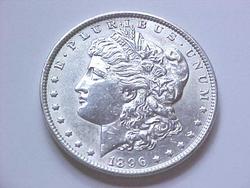
I got my first Morgan Silver Dollar today. Morgans are beautiful, large and allegedly the most popular collectible coin in the US today. This particular specimen was minted in 1896 making around a 110 years old. Its in pretty good condition for a coin of that age. Considering I only paid $21 for it, I’d say its a great deal too!

It has the liberty face on one side and an eagle on the other. Because of the eagles’ somewhat scrawny appearance, they used to be called buzzards! Its called the Morgan after the dude who designed the coin.

Gold At $100 Off Its 2006 Highs

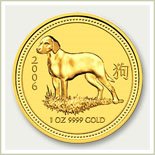
Lunar Gold DogGold has retreated quite a bit since its high of $730 on May 11th 2006. Its currently trading around $630/oz. I see this as a good buying opportunity. While I’m against dollar cost averaging, I think gold is in the beginning of a bull cycle and this justifies buying on dips.

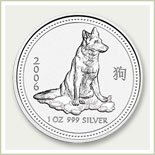
Lunar Silver Dog

I recently bought another Australian Lunar Series coin. This time I got the Dog. Also got it in the Silver coin and surprizing the species of dog is different on both of them.

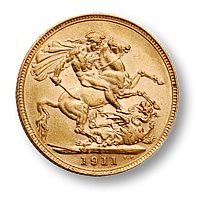
british gold sovereign
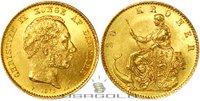
Anyway, I also bought some gold British Sovereigns [around 100+ years old], some French and Swiss francs and an 1873 Danish “Mermaid” Coin.
danish mermaid 20 kroners
I also bought a 200 yr old gold coin of Napolean Boneparte! [Ok maybe I’m going nuts with this gold coin stuff, but its hard to stop buying those damn things now!] Better stop now before the wife gets upset!

I also got a bunch of Silver Eagles. Funny how the price of silver is so low considering that its used in electronics as well as jewellery. Compared to Gold [which in my mind is inherently useless] it hasn’t gone up as much. Anyway I’ll post pictures of them later.

Did The US Treasury Manipulate The Gold Price Down?

Here’s a really interesting article. You can read it yourself and judge how accurate it is.
Did The US Treasury Manipulate The Gold Price Down?

Here’s some interesting parts of it…

On May 11, 2006, the gold price hit a 26 year high of US$719.75/oz. This represented a 50% increase from only November.
Clearly gold had reached a point of being overstretched, driven as it was by many factors including a newfound popularity amongst novice investors. A lot of this was put down to the recent availability of listed gold trading instruments. No one was particularly surprised that a correction occurred.

They were, however, somewhat taken aback by the sheer ferocity of the correction. Gold dropped 22% in five weeks. Heller noticed that, profit-taking aside, there was no change in the fundamentals that suggested gold should be in a long term boom market.

Those fundamentals have been well documented: the US deficit problem, increasing money supply, falling housing market and teetering economy; slowing growth in foreign investment in US dollar assets, and the potential switch to gold reserves; global geopolitical tension; global inflation.

In this climate the gold price collapsed. While there was a certain amount of stimulus from the world’s largest paper gold market – Comex – in altering trading limitations and margin requirements, observers were also puzzled by a large influx of physical gold onto the market.

The amount of gold sold during this period appears to be in the order of 14 million ounces. Heller notes that no party has come forth to claim such significant sales. The reality is, however, that there are very few sources that could actually hold that amount of gold. (If you took, say, an average price of US$625/oz that would equate to US$8.75 billion.)

Undeterred by the anonymity, Heller suggested the seller could be narrowed down by considering who may have been the biggest beneficiary of the sale. That, he decided, was the US Treasury. The US dollar strengthened as the gold price fell. The US Treasury is one of few contenders who would have that much gold.


The Fed is currently stuck between a rock and a hard place. It has raised interest rates 17 times in order to curb inflation and support the US dollar in the face of deficit fears. If it continues to raise rates it runs the risk of tipping the US economy, already under pressure, into recession. If it stops raising rates then US inflation could run hard (and the oil price does not look like falling any time soon). Either way there must be downward pressure on the US dollar.

If there is downward pressure on the US dollar then the gold price will rise (barring manipulation).

And The Winner Is Inflation!

As I mentioned in a previous post about Exxon being the new whipping boy, I’m trying to find out whether the US economy is more likely to head into an inflationary period or slip into recession.

Based on several sources, I feel we will see inflation. According to Financial Sense,

the U.S. is headed for another recession. Given the under-reporting of inflation, which overstates GDP, we may already be entering one. The only difference between the two camps is how it unfolds. As the U.S. enters into recession, tax revenues will decline and government spending will increase as a result of rising entitlements. Deficits will get bigger and the U.S. will have to borrow and monetize more of its debt. War, entitlements, and lack of fiscal restraint means more debt, more borrowing and debt monetization. Eventually the dollar is going to collapse through the weight of the twin deficits. Inflation—not deflation—will be the result. Our debts will only get larger. They will have to be inflated away. Our situation is beyond salvaging as Volcker did back in 1979-1987. It is now inflate or die. Eventually the debt will be paid or expunged, but it will not be through payment or default. Instead, as The Bank Credit Analyst stated in its July, 2003 issue, “The only way to avoid a destructive end to the super-cycle of rising debt and illiquidity may be to try and devalue accumulated debts through increased inflation.

Next year the new Medicare prescription benefit kicks in. In subsequent years the first batch of baby boomers will begin to draw on Social Security. Each year entitlements like Social Security and Medicare rise and then escalate as the retirement population expands. The War on Terror and Iraq War will cost even more money in the years ahead. Declining U.S. oil and natural gas production as well as increasing global energy demand will mean higher energy prices and bigger trade deficits. That will translate into a lower dollar. Today’s U.S. is not the same U.S. of the 1930s. We are no longer self-sufficient in manufacturing, capital or energy. The savings rate in the U.S. is now negative. The 1930s was a different time. We were a different country. We were morally different than what we are today. In summary a different time and a different country mean a different outcome. Inflation— not deflation—is inevitable.

As of this writing the global monetary base has expanded by 20% over the last two years, the highest rate of expansion since 1975. The monetary aggregates are expanding again, with an increase of $30 billion in one week and $42 billion in the most recent report. Recent money growth is approaching 12.5% annualized. Contrary to popular opinion, money is not tight, but loosening. As shown in the previous graphs of the 1970s, high interest rates do not stop inflation. The only thing that can stop inflation is the limitation of new money and credit. Does anybody really believe that American voters will tolerate a recession before calling on government to end it? There are already calls for price controls on oil, natural gas, and gasoline. Got gold, silver or oil?

Also of note, was this post on the Big Picture.

“We get the distinct impression that consensus thought right here is that “inflation is a lagging indicator.”

Funny thing about this sentiment info is that the people who’re telling us that “inflation is a lagging indicator” are the same people who’ve told us all along that “there’s no inflation,” the same people who said gold couldn’t rally, the same people who said oil wasn’t going to stay at high levels, and the same people who said tech would be a leader, the same people who said the “Fed’s done raising rates” for a year, and the same people who said the Yanks were out of the race.

Plainly, these people are dangerous and we think inflation will work higher.”

So whats the best way to hedge yourself against inflation? Invest in Gold, Silver, Oil wells, foreign currencies & mining stocks.

Incidentally, the WSJ reported today that inflation is up [only] 2.5% on an annual rate, the highest in 11 years.[yeah right!] The dollar slid, stocks were down and gold and oil were up.

Why Kiyosaki Is Buying Gold.

Robert Kiyosaki has a column on why he’s buying in gold. I don’t know why it has tomorrow’s date on it, but its pretty interesting nonetheless.

Bet on Gold, Not on Funny Money
by Robert KiyosakiTuesday, July 25, 2006

Gold recently dropped more than $100, or 14 percent, after hitting a 26-year high of $730 in mid-May. With that drop in price, I became a buyer of gold once again.

Can the price of gold go lower? Absolutely. If it drops to $500 an ounce, I’ll buy more. Let me tell you why.

But first, to give you some background, I’ve been in the gold market since 1971, when then-President Nixon took the U.S. dollar off the gold standard. Back then, gold was pegged at $35 an ounce, and ran to a high of $850 an ounce by January 1980. In the same period, silver hit approximately $40 an ounce.

Today, as I write, silver is around $13 an ounce. So I’ve seen the price of precious metals go up and down.

Mining a Hunch

In 1996, I founded a gold mining company in China and a silver mining company in South America. Both companies eventually became publicly traded on the Canadian Exchanges.

I formed gold and silver mining companies then because I believed that gold and silver were at “lows” and were set to come back up. At the time, gold was around $275 an ounce and silver was around $5 an ounce. If I’d been wrong, I would have lost the mines.

I was confident about gold and silver because I wasn’t betting on them. Rather, I was betting against the dollar and oil. In 1996, oil was about $10 a barrel, and that seemed low. My suspicions were that the dollar was strong, and I believed it would drop when oil went higher. I felt the conditions were right for a massive change in the markets. So far, I’ve been pretty accurate.

I’m confident that those conditions haven’t changed. With the current national debt, balance of trade, and ongoing war in Iraq, the dollar is growing weaker and oil is going higher. That’s why I recently bought more gold as well as more silver — to bet against the dollar and oil yet again.

Inflation or Recession?

In many ways, the conditions are far worse now than they were in 1996. Today, we have a slowing demand for the dollar. At the same time, it appears that the Federal Reserve is increasing the supply of dollars.

As you know, low demand and high supply means a drop in value of anything, including the dollar. And in order to save the dollar’s purchasing power, Ben Bernanke, the new Federal Reserve chairman, may be forced to raise real interest rates. By “real,” I mean an interest rate that’s higher than the rate of inflation.

(For example, if inflation is at 5 percent and interest rates are at 5 percent, the real interest rate is 0 percent. So, in this example, to increase demand for the dollar, the Federal Reserve would have to raise interest rates above 5 percent, to, say, 8 percent. That would means investors would receive a net 3 percent return on their money.)

So Bernanke has a tough choice to make: If he prints more money to bolster the dollar, inflation increases and the dollar may collapse. If he raises interest rates to slow inflation, the economy may go into recession.

The Oil Problem

Granted, if Bernanke moves to save the dollar by raising interest rates the price of gold and silver will probably decline — but so will our economy. If the economy begins to slow, the stock market often slows or turns into a bear market.

Personally, I suspect he’s more afraid of deflation than inflation. So for now, I’m betting that he’ll continue to increase the supply of dollars, which may be why the U.S. stopped reporting M3 in March of this year. (M3 measures how many dollars are in the system, and not reporting it is akin to not opening your credit card statement and pretending you’re not in debt.)

But oil adds another wrinkle. Oil producers are seemingly less and less willing to accept dollars because the purchasing power of the dollar keeps falling, precisely because we continue to print more money.

To compound the problem, we’re running out of easy-to-produce light, sweet crude. While there’s still a lot of oil to be extracted, it’ll be more expensive to produce, which makes $100-a-barrel oil very possible in the future. This, in turn, makes inflation more possible.

Historically, one barrel of oil has been worth about 2.2 grams of gold. Even when the dollar dropped in value, the ratio between gold and a barrel of oil remained pretty fixed. But recently, it has taken 3.4 grams of gold to buy a barrel of oil, which means either oil is expensive or gold is cheap.

I’m betting that gold is cheap, and that it’ll correct as oil goes higher and countries such as Russia, Venezuela, the Arab states, and Africa become more reluctant to accept the U.S. dollar. For a while now, we’ve been allowed to pay for the goods and services from other countries with funny money, but the world appears to be less and less willing to take it as payment.

Good Money Before Bad

Which way will the new Fed chairman take us? Will he be inflationary, which means printing more money, or deflationary, which means raising interest rates and tightening the flow of money? Does he save the dollar, or save the economy? Does he increase the money supply, or increase demand for the dollar?

My strategy remains the same as it’s been for years: I bet on real money, which is gold and silver. I also continue to borrow funny money to buy real estate. Since oil and gas are in high demand globally and appear to be going up in price, I also invest in oil and gas production.

Again, I’m not really betting on these assets — I’m primarily betting against the dollar, and the leaders who manage the U.S. economy.

Now you know why I buy more gold and silver every time they drop in value in the current economic environment. What smart investor wouldn’t gladly spend funny money to buy real money?

Another Gold Investing Update


Regular readers will know that I’ve been investing in gold since gold was in $500/Oz. I advised some readers not to jump in at $720 but wait for a pull-back. Well it pulled back from $720 to around $570 and then jumped up a bit. Today it settled around $620 and I bought a little bit more. As I previously mentioned, I like the perth mint Lunar series for the 1 Oz Gold as well as the 1 Oz Silver coins.

This time however, I bought the US mint $50 1 Oz Buffalo Coins. Its the first time the US Mint has made 99.99% pure 24K 1 Oz gold coins. I bought them already certified by PCGS as “First Strike MS-69”.

PCGS is perhaps the most popular independent third party coin grading & certification service today. The grading scale goes from 0 to a maximum of 70. For example a grade of 10 would be a very poor condition. A grade of PF-60 (or MS-60) or above would be an uncirculated coin. PF-70 would be absolute “perfection”. Some experts say there is no such thing as a “perfect” coin. In fact, some grading services will not place a grade on any coin above MS-69 or PF-69.[PF or PR means its a Proof coin, where by the background has a mirror like finish and the fine details of the coin are more pronounced.]

A coin that was made within the first 30 days of issue are called First Strikes. These are the initial production coins and sometimes these become more valuable. Today was the last day that PCGS was grading coins as “First Strike” so I decided to get them.

GoldLine was selling these same coins today for a whopping $1044, but I got them from American Precious Metals Exchange for only $667. These same coins are already selling on Ebay for atleast $735 so at $667, it doesn’t seem like there’s much downside.

Gold is in a long term bull market so I really don’t think I’ll lose any money on these coins. However Silver might be a better play with more upside potential, but then who knows what will happen. I’d buy both but my wife inherited about 5 kilos [about 155 Ounces] of Silver a few years ago so I guess were done hedging with silver.[But I still bought a few Silver 1 Oz coins off Ebay. I’ll post the pictures once I get them]

Oh, and 5 kg of Silver is less than $2,000 worth!

Gold Crosses $700 Mark

I feel like a broken record. I’ve grown hoarse trying to get people to invest in Gold.

Anyway if you haven’t buy some already, now may not be the best time to jump in. You might want to wait for a pull back. Of course, which way it’ll go from here is anyones guess.

However Gold still remains below a high of $850 on the cash market, a London fix price, set on Jan. 21, 1980. On that date, futures hit an intraday high of $875 before settling at $825.50. Adjusted for inflation, gold would need to trade to $2,200 to match those highs. [source: WSJ.com]

Gold Hits $600 an ounce

Gold finally hit $600 an ounce! Last week I was lamenting how I should’ve bought more, but atleast I bought something. Although its not enough to make me rich, every little bit helps!

But its does bring up a good point. Rather than spend 1% of your net invested assets in a 100 different things, its better to focus your investments into 3 or 4 main categories. That way your focus isn’t diffused among too many different things and when one of the investments does well, its reflected immediately in your portfolio.
I had such a strong feeling about gold, I should definitely have bought more. I had thought about playing the credit-card 0% balance transfer game and buying gold, but I thought the strategy was inherently too risky in principle to implement [even though I was very confident I wouldn’t lose money].

1 Ounce Silver Dragon

[1 Ounce Perth Mint Lunar Series Silver Dragon]
Bought a 1 ounce silver dragon coin on Ebay. Its a beautiful coin, minted by the Perth Mint in Australia. [As I mentioned in a previous post, I’m a big fan of the Perth Mint’s Golden Lunar Series.]

Don’t know why I bought it. Maybe its because I like shiny things. I think silver prices might jump 50% over the next 3 years but the 1 ounce silver is current worth about $9.25 and the coin was just under $20 with shipping and insurance. I definitely won’t make my fortune with a $20 coin. But I guess its better than blowing money a DVD. Or is it??

Anyone else out there who likes collecting coins?